

Quartz Movement
An electronic watch movement regulated by the highly stable vibration of a quartz crystal, normally powered by a battery.
Also known as: quartz calibre, quartz caliber, electronic quartz movement
Definition
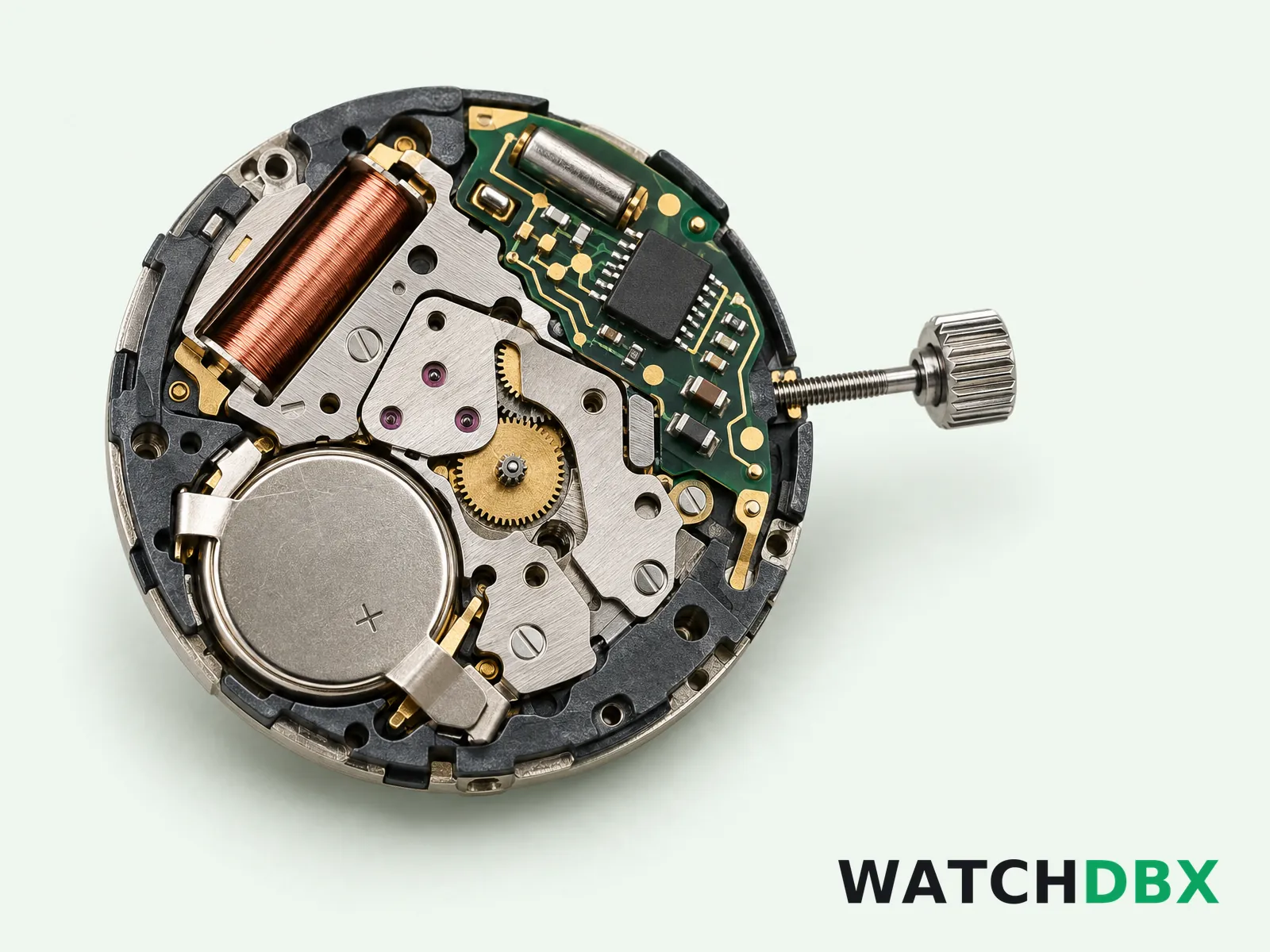
A quartz movement uses an electronic oscillator rather than a mechanical balance to establish its timebase. A battery or other electrical source applies voltage to a quartz crystal, which vibrates at a highly stable frequency; an integrated circuit divides that signal into timing pulses. In an analogue quartz watch those pulses drive a stepper motor and gear train that move the hands, while a digital watch drives an electronic display. Quartz's high-frequency reference generally delivers much better everyday accuracy than a conventional mechanical movement.
Why it matters
Quartz watches are usually accurate, robust and low-maintenance, making the movement type an important buying distinction. Battery life, service strategy and collector perception can differ substantially from mechanical watches.