

Mechanical Movement
A watch movement powered by a wound mainspring and regulated mechanically, without using a battery as its primary energy source.
Also known as: mechanical calibre, mechanical caliber, mechanical watch movement
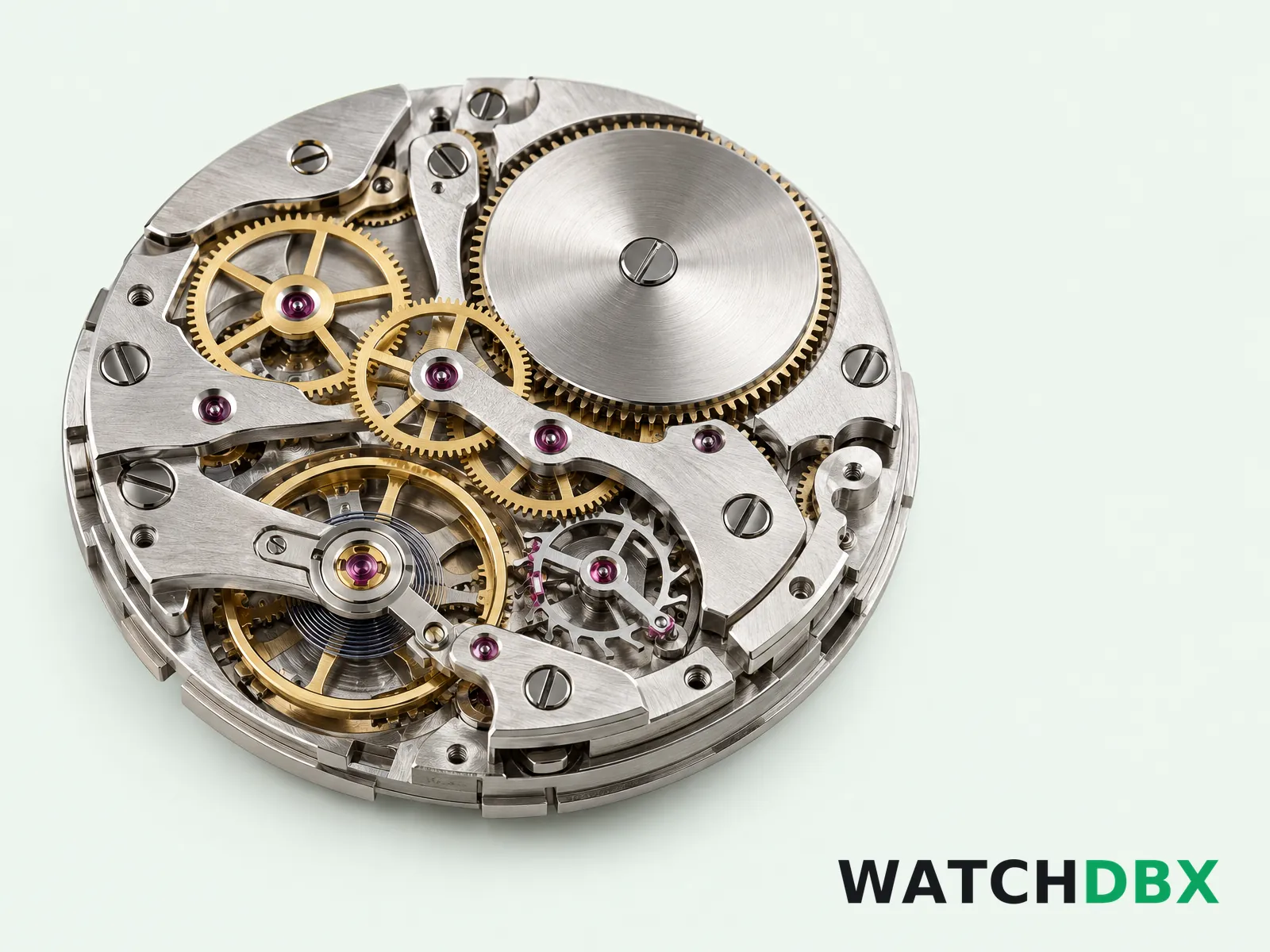
Definition
A mechanical movement stores energy in a wound mainspring rather than a battery. As the mainspring unwinds inside its barrel, the gear train carries that energy toward the escapement. The escapement meters the flow into impulses while the balance wheel and balance spring oscillate at a controlled rate, establishing the watch's timebase. Mechanical movements may be wound by hand or automatically by a rotor. Their rate is affected by regulation, position, temperature, magnetism, shock, lubrication and the condition of the movement.
Why it matters
Mechanical construction is central to traditional watchmaking and strongly affects ownership: it brings periodic servicing, finite power reserve and lower absolute accuracy than quartz, but also mechanical craftsmanship, repairability and collector appeal.